Edinburgh's parking signs are not as complicated as they look — once you know what to look for. But getting one wrong can cost you £100, and in some cases your car gets towed. I took these photos on Edinburgh's streets to show you exactly what you'll see, what it means, and whether you can actually park there. Every photo is real, every description is first-hand.
Signs you'll see on posts
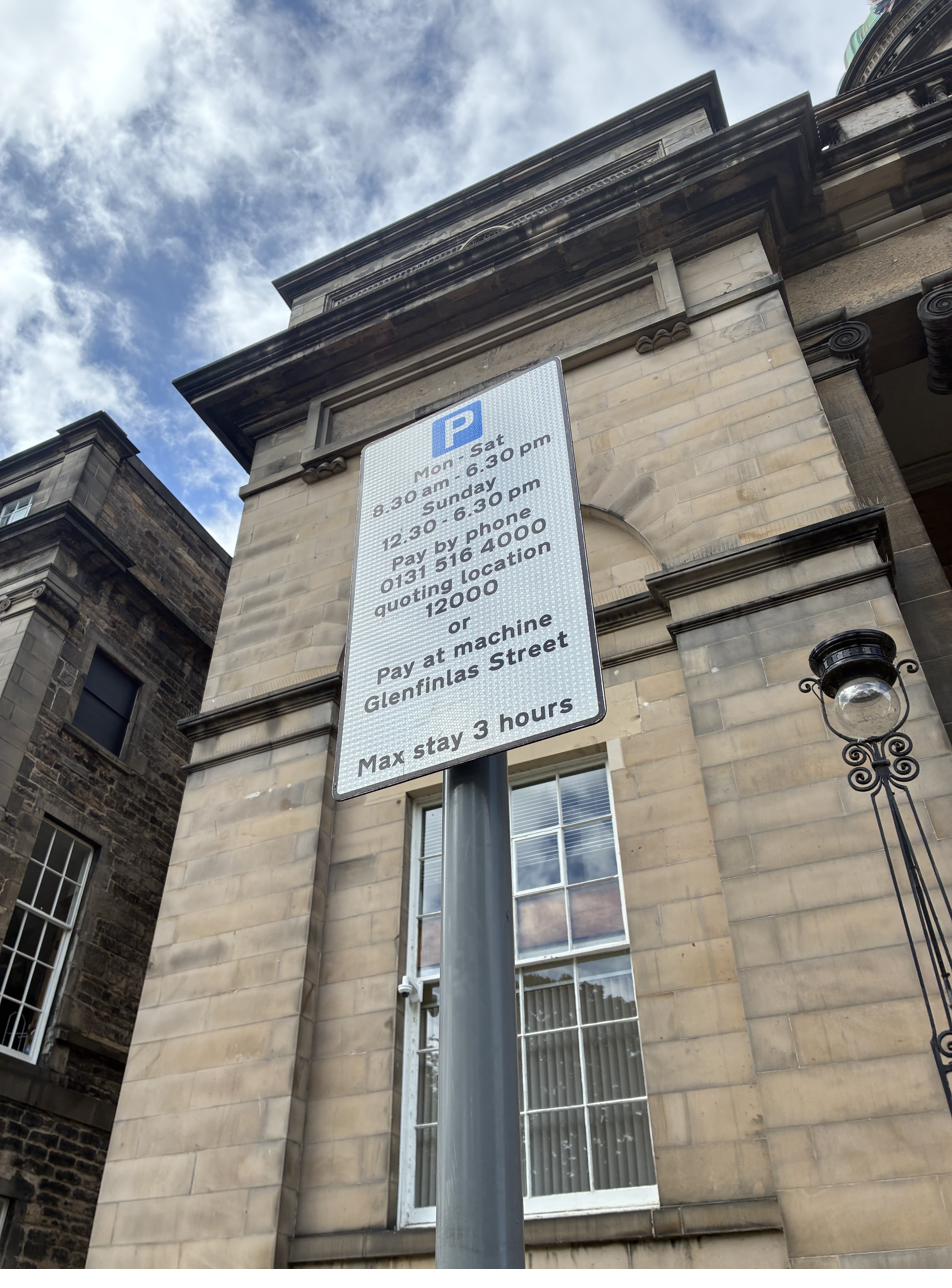
This is the sign most visitors are looking for. The blue P means parking is available here, and the sign tells you everything you need to know: Mon–Sat 8:30am–6:30pm and Sunday 12:30pm–6:30pm are the enforced hours. Outside those times, parking here is free.
You can pay two ways: by phone (call 0131 516 4000 and quote the location code — in this case, 12000) or by using the RingGo app, or pay at the nearest machine, which the sign helpfully tells you is on Glenfinlas Street. The max stay is 3 hours — overstay that and you'll get a PCN, even if you've paid. The clock starts when your ticket or phone session begins, not when you parked.
This is a central-zone sign, so expect to pay between £6.80 and £9.00 per hour depending on the exact zone. Always check the tariff shown on the machine or the RingGo app before you confirm.
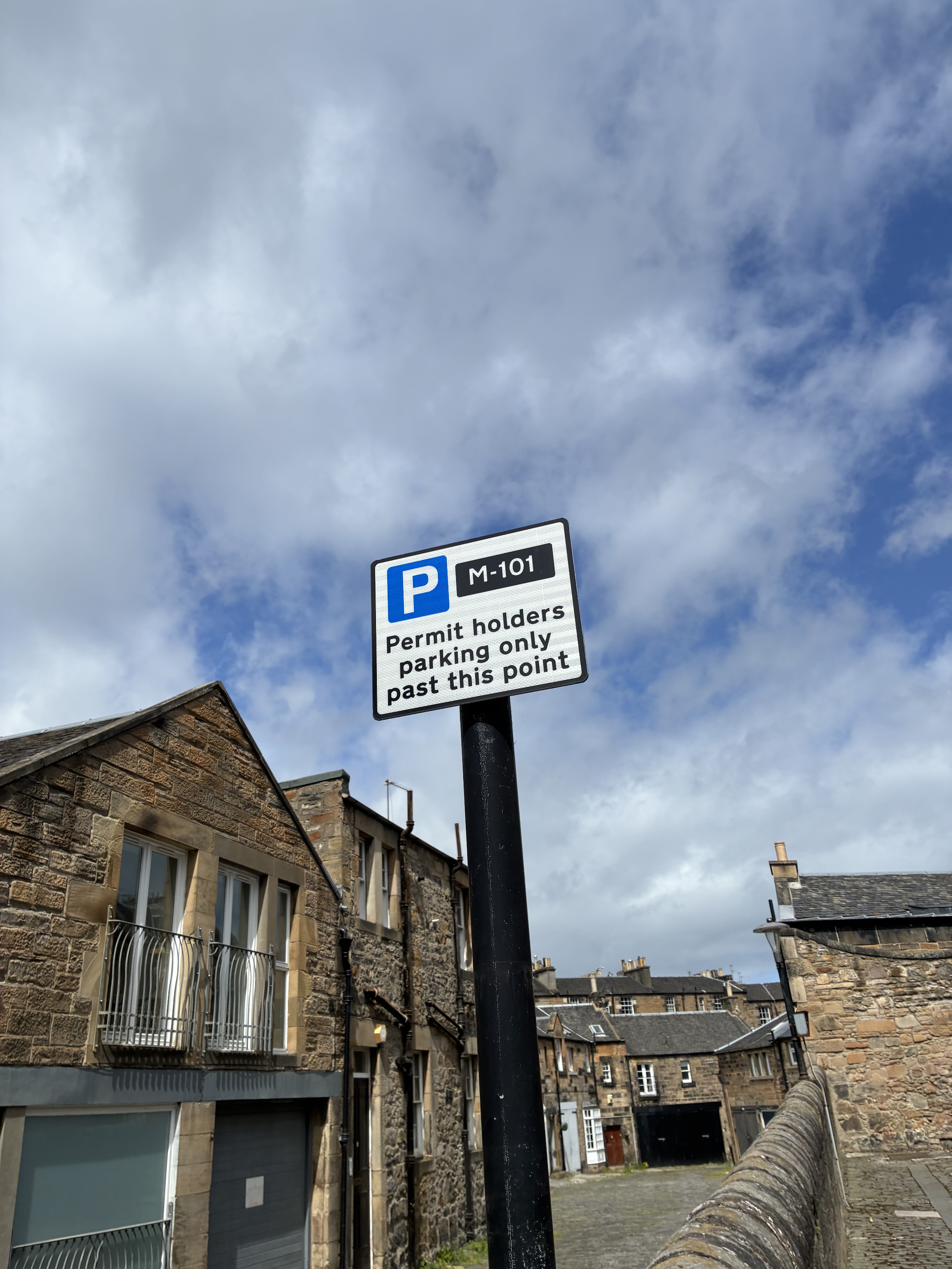
This sign marks the start of a permit-only area. The code M-101 identifies the specific zone — in Edinburgh's system, the letter and number tell enforcement officers (and residents) exactly which permit is valid here. "Permit holders parking only past this point" means that every bay beyond this sign requires a valid permit for this zone.
If you don't have a resident's permit matching this zone, you cannot park here. There's no pay & display option — it's permit or nothing. If you park here without one, you'll receive a Code 16 PCN (parked in a permit bay without a valid permit), which is a £100 fine, reduced to £50 if paid within 14 days.
This is one of the most common mistakes tourists make. They see the blue P and assume they can pay, but the word "permit" is the giveaway — no machine, no RingGo, no exceptions. A Blue Badge doesn't get you out of this one either.
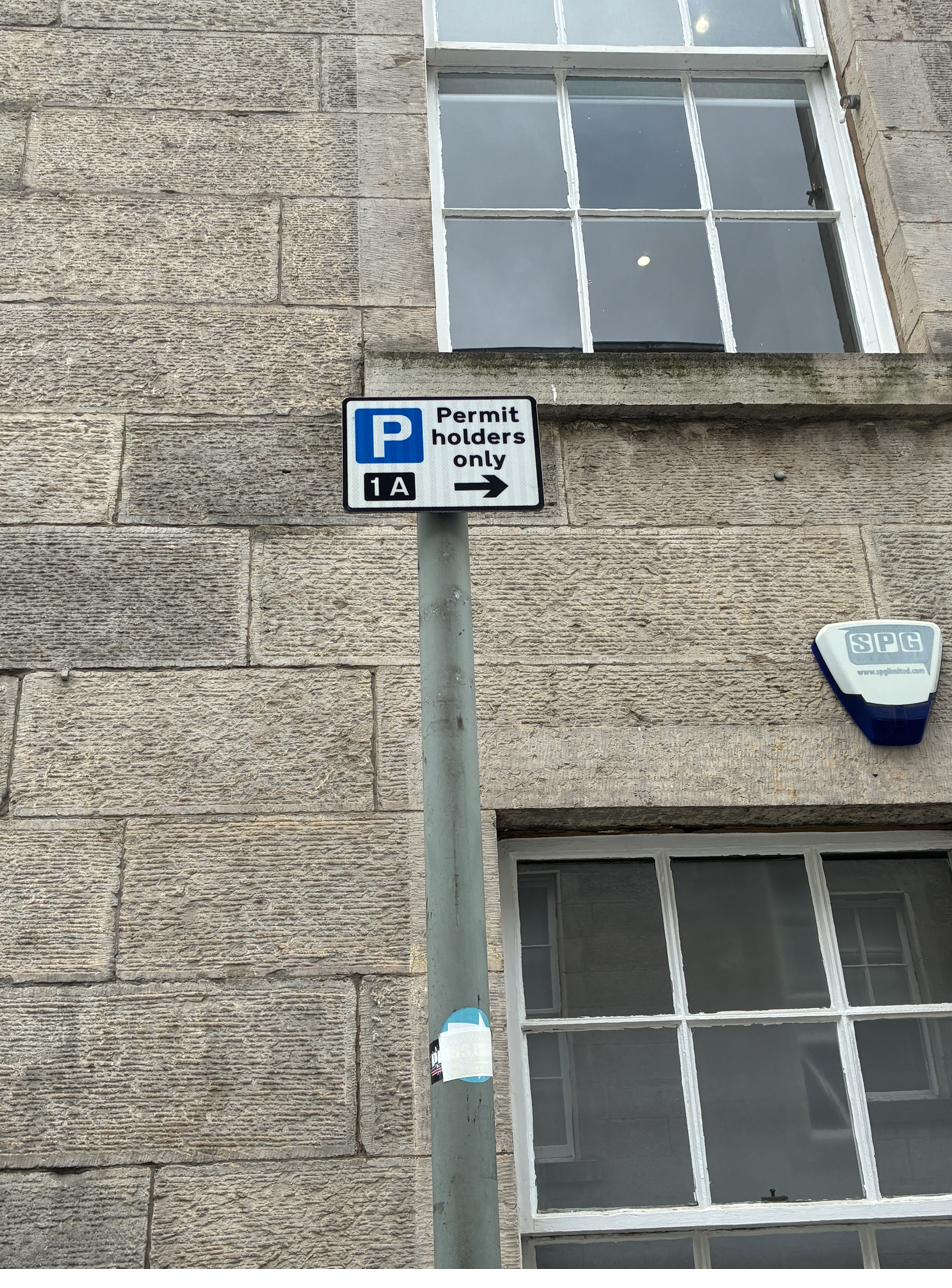
Same rule as above, but this sign adds two useful details. First, the zone is clearly shown as 1A — Edinburgh's most expensive zone, covering the New Town core around George Street and Charlotte Square (£9.00/hr if there were a pay option, but there isn't here). Second, the arrow pointing right tells you which direction the restriction applies — the permit bays are to the right of this sign.
Pay attention to the arrow. Some streets have permit bays on one side and pay & display on the other, or permit bays in one direction and double yellows in the other. The arrow is the sign's way of saying "this rule applies that way."
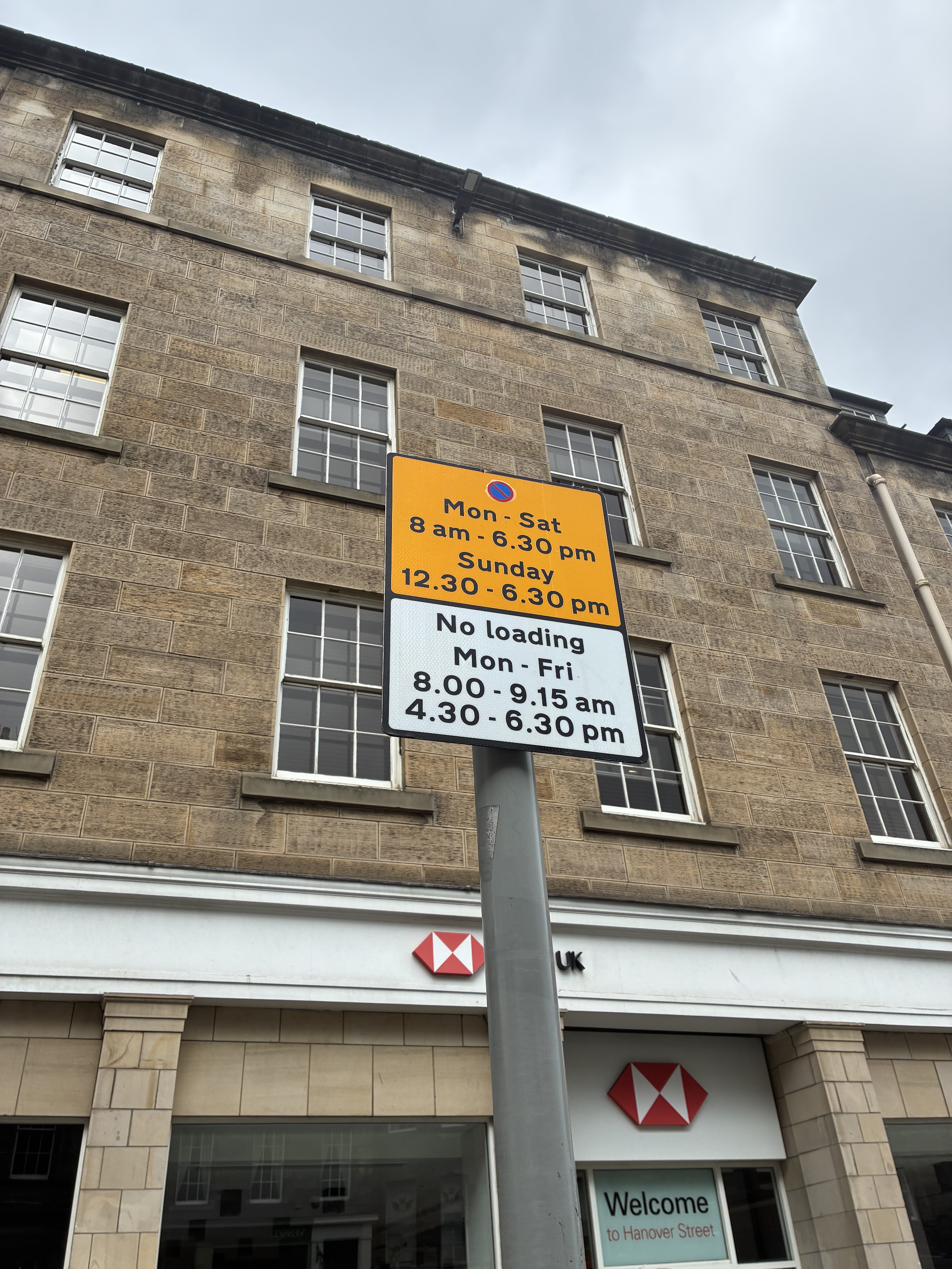
This is one of Edinburgh's strictest signs, and it's on Hanover Street — right in the city centre. It has two parts, and both matter.
The yellow section (top) shows the no-waiting circle and the hours: Mon–Sat 8am–6:30pm, Sunday 12:30pm–6:30pm. During those hours, you cannot wait here at all — not even "just for a minute." This is a Code 01 contravention.
The white section (bottom) adds a loading ban during peak hours: Mon–Fri 8:00–9:15am and 4:30–6:30pm. During those windows, you can't even stop to load or unload goods from your vehicle. Outside the loading-ban hours but within the no-waiting hours, you can still technically load or unload (actively carrying goods to or from the vehicle), but you absolutely cannot park or wait.
The distinction matters because loading/unloading is normally a defence against a yellow-line PCN — but not here, not during peak hours. And "loading" has a specific legal meaning: physically carrying goods between the vehicle and a premises. Sitting in the car with your hazards on isn't loading.
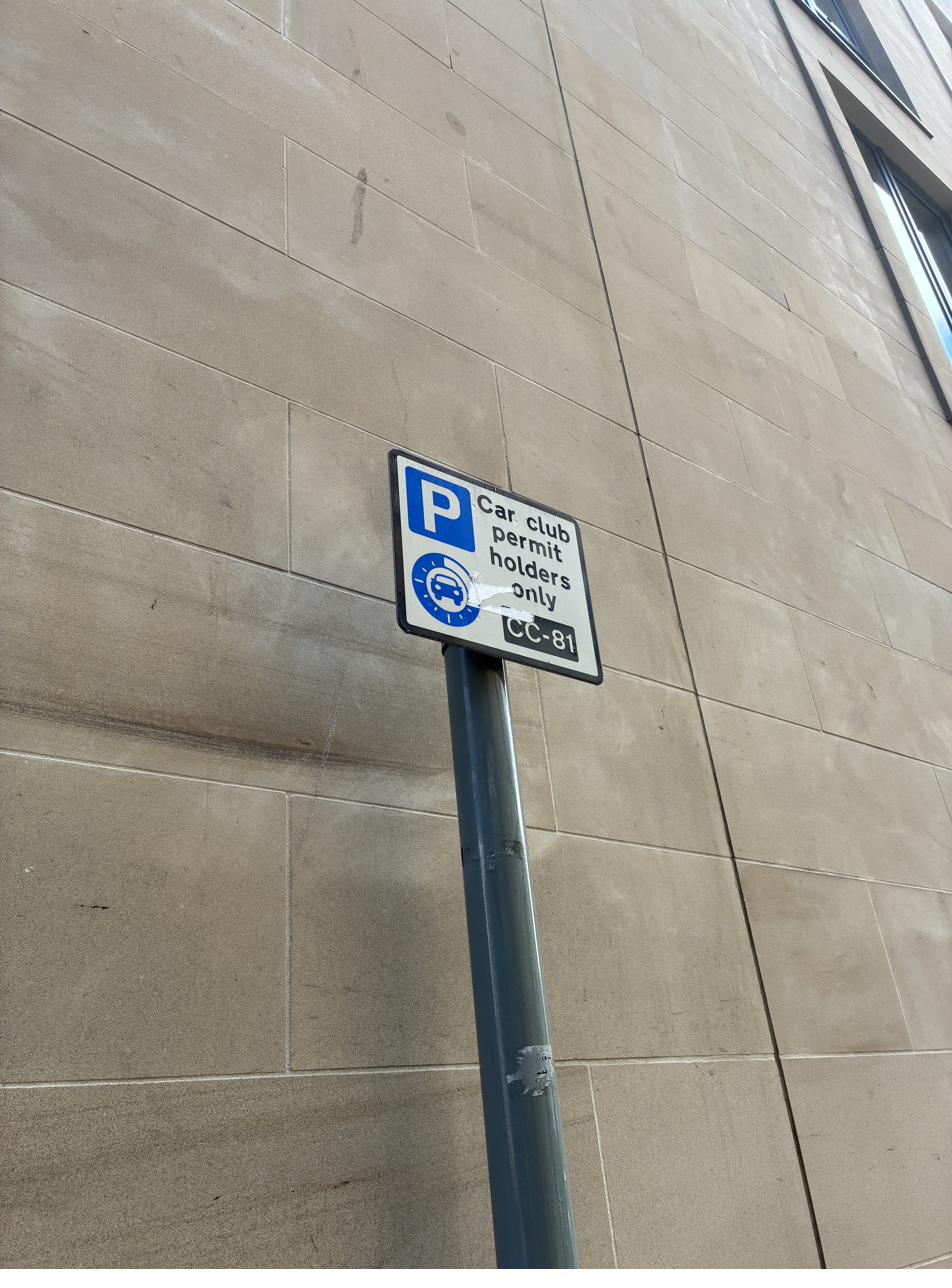
You'll spot these dotted around Edinburgh's streets, usually with a car-sharing logo and a code like CC-81. These bays are exclusively for car club vehicles — companies like Enterprise Car Club that let members book shared cars by the hour.
If you're not driving a car club vehicle, you cannot park here, even briefly. It doesn't matter if the bay is empty and every other space is taken — it's reserved 24/7. Park here without a car club vehicle and you'll receive a PCN.
This catches people out because the bays are often empty (the whole point of car clubs is that the cars are usually out being used), so it's tempting. Don't be tempted.
Road markings you'll see on the ground
Edinburgh's signs are on posts, but half the story is painted on the road. These markings tell you what kind of bay you're in — or whether you're in a bay at all.
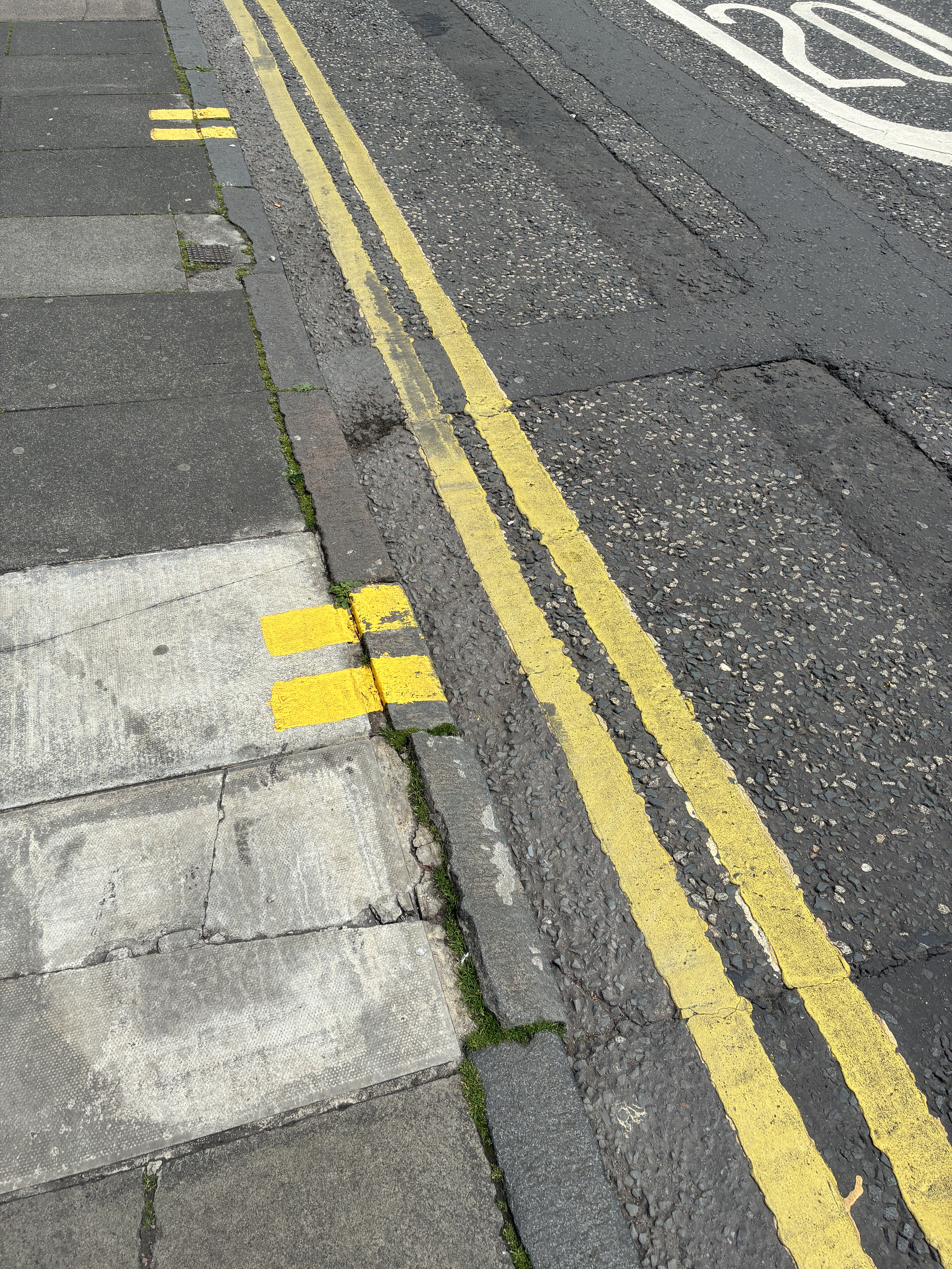
This is the most restrictive marking you'll find on Edinburgh's streets, and it's important to understand both elements.
The double yellow lines on the road mean no waiting at any time — 24 hours a day, 7 days a week, 365 days a year. There's no time plate needed because they're always in force. Park on double yellows and an enforcement officer will observe your vehicle for 5 minutes, then issue a Code 01 PCN.
But look at the kerb. See those two short yellow dashes painted on the kerb edge? That's a loading ban. Two dashes means no loading at any time — a 24/7 ban with no exemptions for anyone, Blue Badge included, and an enforcement officer can issue a PCN straight away. One dash would mean a loading ban during certain hours only (check the sign) — outside those specified hours, waiting and loading is allowed again, Blue Badge or not. This means that with two dashes, as here, you can't even stop to unload shopping, deliver parcels, or drop off furniture. If an enforcement officer sees you here, the observation period and PCN apply regardless of what you're doing.
Many people know about double yellows but miss the kerb marks entirely. The lines on the road say "no waiting." The marks on the kerb say "no loading either." Together, they mean: do not stop here, full stop.
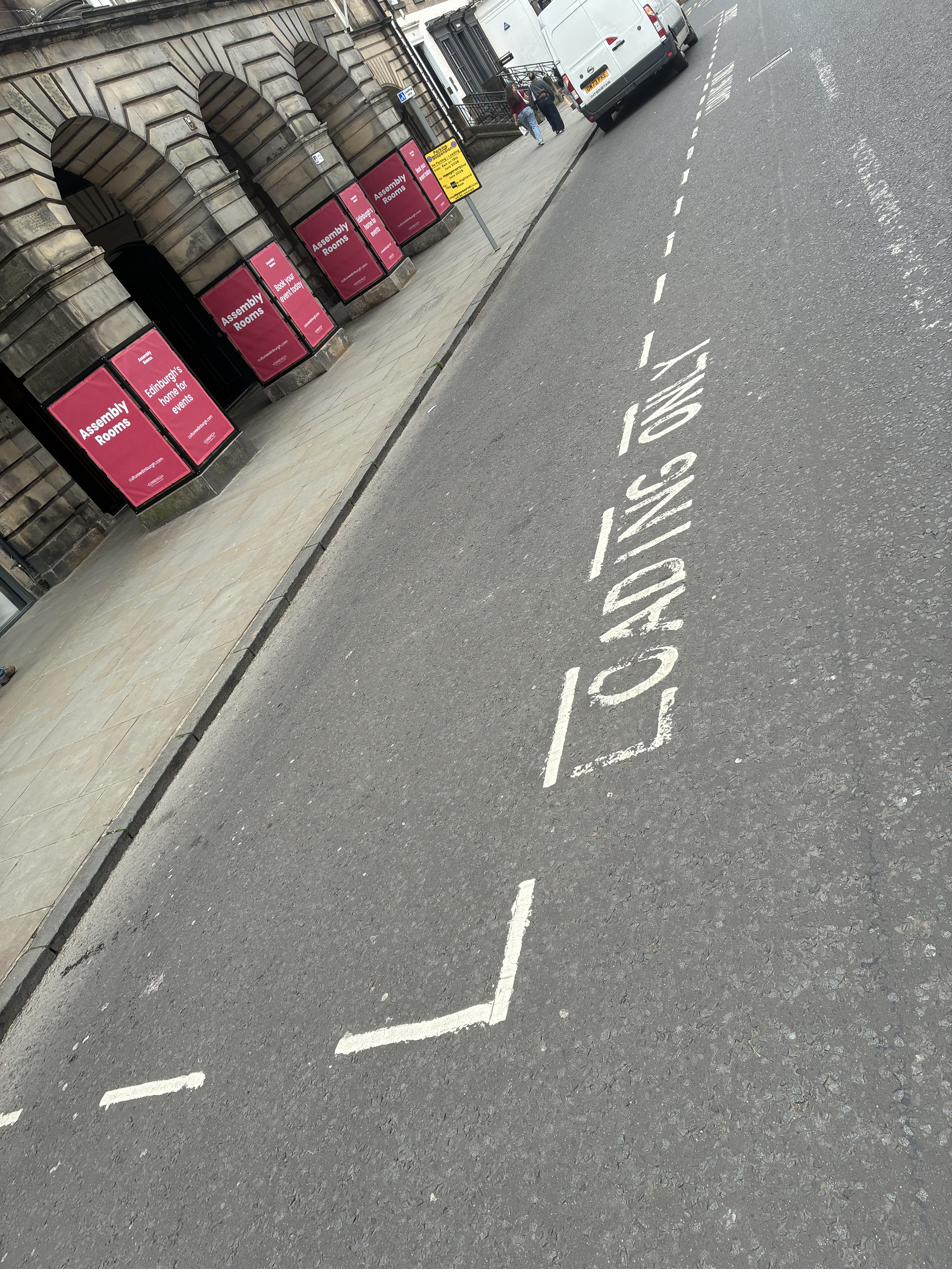
Painted in large white letters on the road surface, usually with white bay markings. This one is on George Street, right outside the Assembly Rooms. A loading bay is for actively loading or unloading goods — meaning you need to be physically carrying items between your vehicle and a nearby building.
The key word is "actively." You can pull in, open the boot, carry boxes into a shop, come back out, get more boxes — that's loading. You cannot park here while you go shopping, pop into a cafe, or "just nip in for five minutes." If an enforcement officer walks past and there's no evidence of active loading (no open boot, no goods, no movement), you'll get a PCN.
Loading bays typically operate during specific hours — check the nearby time plate. Outside those hours, the bay usually reverts to a normal restriction (often a yellow line).
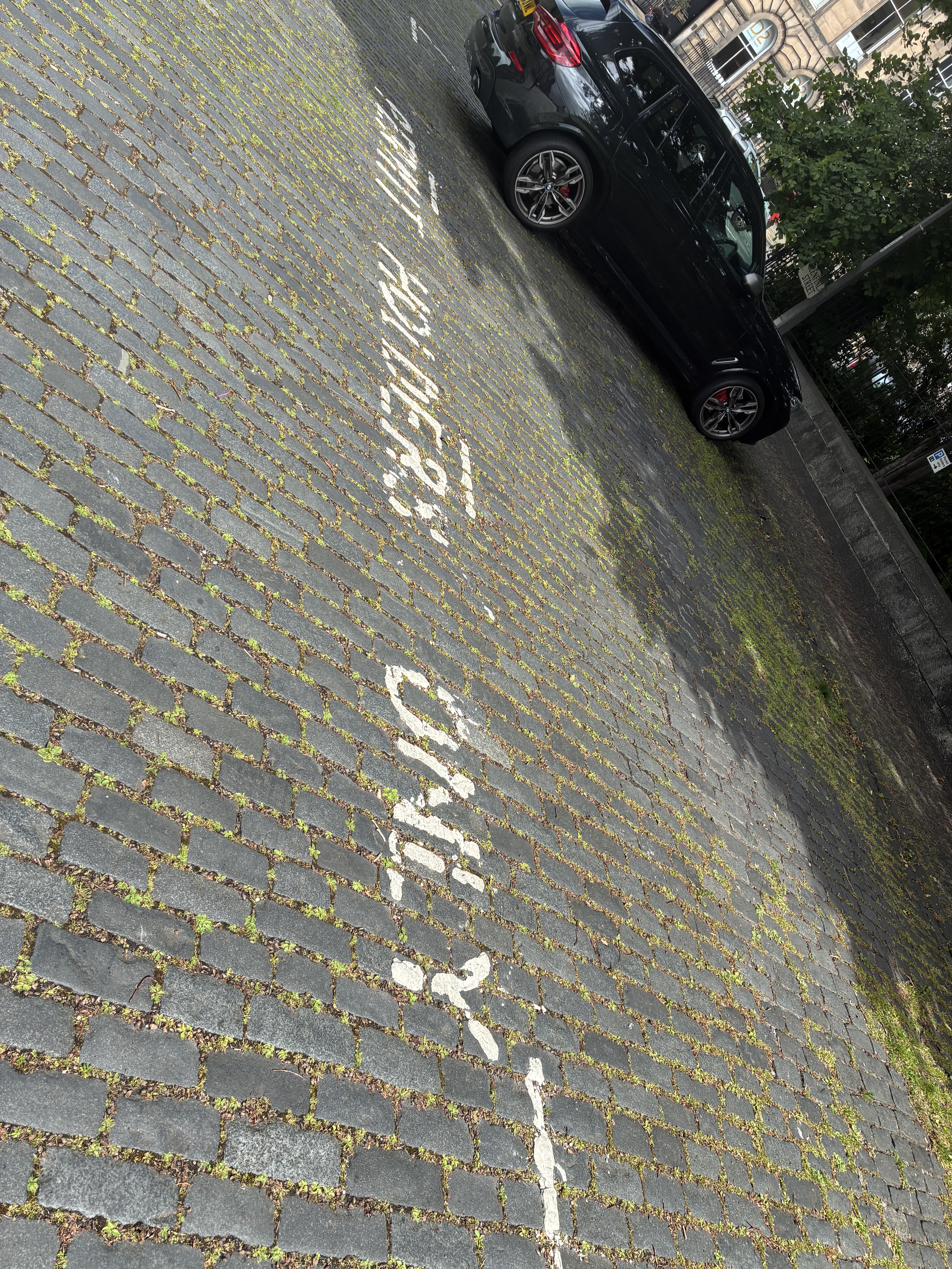
On Edinburgh's older cobblestone streets, you'll often find the bay type painted directly on the road surface rather than on a post. Here, the faded white text reads "PERMIT HOLDERS ONLY" — telling you this bay is reserved for residents with a valid permit for the zone.
The challenge with cobblestones is that paint wears away fast. Edinburgh's setts are beautiful but terrible at holding road markings, so the text can be very hard to read — especially in the rain. If you can't read what's painted on the ground, look for the upright sign. There will always be one on a post nearby, and that's what the enforcement officer will reference when writing a ticket.
A faded marking doesn't mean the restriction doesn't apply. The sign on the post is the legal authority, not the paint on the road.
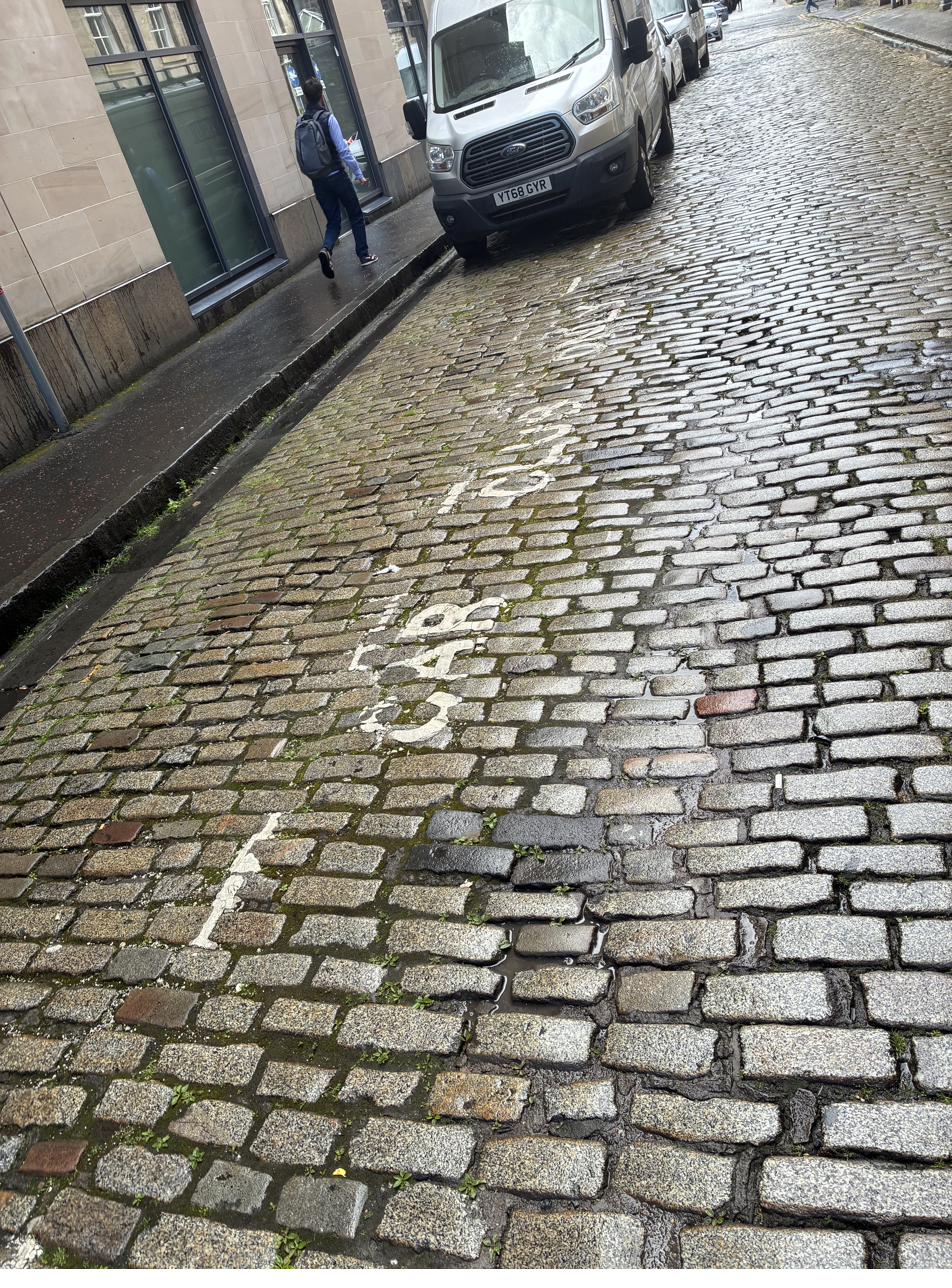
This is one of the most common problems visitors face in Edinburgh's Old Town and New Town. The road markings on these cobblestone streets are often so worn they're almost invisible. You can just about make out white bay lines and fragments of text, but good luck reading what they say.
Here's the rule of thumb: if you can see any trace of white bay markings on the road, there is a restriction in force. Don't assume a faded bay means an abandoned one. Look around for the upright sign — it'll be within sight of the bay, mounted on a post, and it will tell you the zone, hours, and whether you need a permit or can pay.
I've issued plenty of tickets to drivers who told me "I couldn't read the road." The sign on the post was perfectly legible. That's the one that counts.
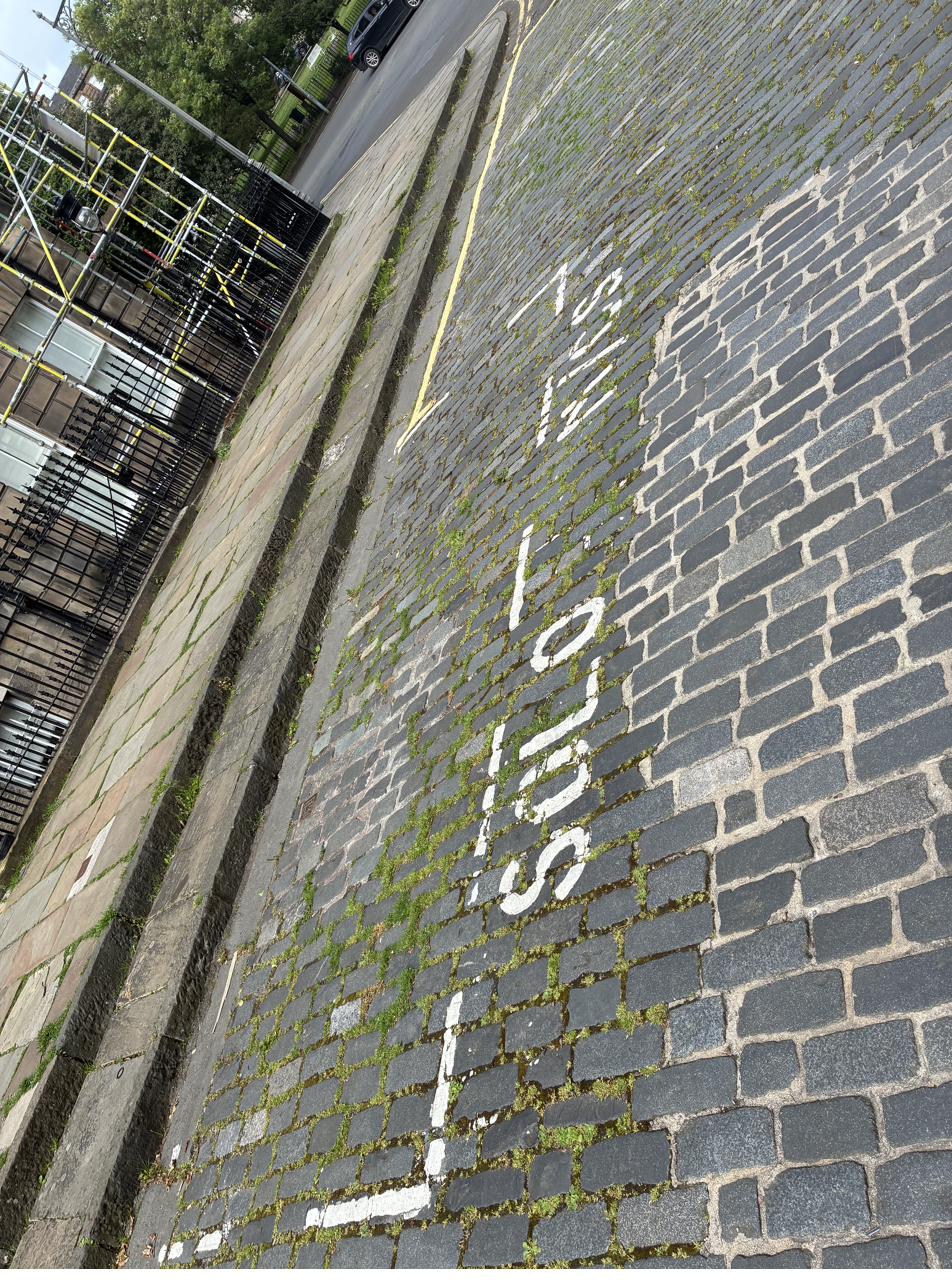
Another cobblestone special. This faded marking reads "SOLO" — short for solo motorcycle parking. These bays are reserved for motorcycles and are free to use (no payment needed). You'll also notice the single yellow line running along the kerbside — that yellow line applies to cars and other vehicles outside the marked bay.
If you're in a car, this bay is not for you. If you're on a motorcycle, you can park here for free during the unrestricted hours. The yellow line next to it means cars cannot wait during the restricted hours shown on the nearby time plate.
The combination of a solo bay and a yellow line in the same stretch catches people out — they see a gap that looks like a parking space, but it's actually a motorcycle bay next to a yellow line. Check before you park.
The golden rule
Every photo in this guide comes back to the same thing: read the sign on the post. Road markings fade, cobblestones swallow paint, and Edinburgh's weather doesn't help. But the upright sign is always there, always legible, and always the legal authority. When in doubt, find it, read it, and follow it.
Check any Edinburgh street's parking rules
Our main guide covers 2,600+ Edinburgh streets — look up any street to find its zone, tariff, and hours instantly. Plus a live tool that tells you if enforcement is active right now.
Look up your street →If this page saved you a parking ticket, you can buy me a coffee — no pressure, it just helps keep the guide free and up to date.